The Number Of ADA Certified Portable Restrooms Are Required in a Rental Cluster?
If you are renting portable washrooms for an occasion, festival, public event, or temporary site arrangement, the brief answer is this: when you have a collection of portable single-user bathroom units, at least 5 percent of the units in that cluster must be accessible.
That is the number most people are searching for when they ask about an ada portable bathroom or an ada certified mobile commode. But in technique, the count is just component of the task. The easily accessible device needs to be a genuine, functional holiday accommodation, not just a larger box went down someplace on the side of the lot.
That difference issues. I have seen organizers concentrate on buying the appropriate quantity of ada compliant mobile restrooms, then forget whether somebody can in fact reach the unit, survive the entrance, turn inside, and utilize the fixture with the called for clearances. Compliance is not simply a mathematics problem. It is a positioning and functionality trouble too.
The number that manages the cluster
For portable single-user commode devices prepared in a cluster, the regulating access policy is that at the very least 5 percent of the devices in each collection should be accessible. The Access Board has actually explained that this uses also at temporary events.
That indicates the requirement is connected to the cluster itself, not just the website overall in some vague feeling. If you have one financial institution of units near the major entry and an additional financial institution near food service or a far-off task location, the inquiry is not only how many total units you rented for the day. The concern is the number of remain in each cluster and whether each collection consists of the required accessible share.
This is where individuals in some cases get floundered. They think one ada accessible mobile bathroom somewhere on the home looks after whatever. The availability criteria are a lot more particular than that. The 5 percent regulation puts on collections of mobile single-user units, and the available units need to become part of that setup.
If you are utilizing the phrase ada-compliant portable bathrooms in a rental discussion, this is normally the initial indicate pin down with your vendor. Ask the number of systems remain in each cluster, how many obtainable systems are being provided within every one, and where they will be placed.
Why the count alone is not enough
A certified matter can still produce a poor result if the available device is efficiently pointless. The federal standards require more than a bigger delay or a broader door. An ada compliant obtainable portable bathroom must be situated on an obtainable path, and the entrance needs to be accessible also. If ramps or landings are needed, those components need to comply with the technical requirements.
Inside the device, the toilet area have to satisfy the relevant technical demands for component clearances, transforming room, door steering clearances, and the pertinent grab bar and water wardrobe clearance policies. The unit likewise has to be identified with the International Icon of Accessibility.
That is why I often tend to inform customers that getting an ada mobile toilet is the start of conformity, not completion of it. The rented unit has to function as component of an accessible experience from the approach all the way through use of the restroom.
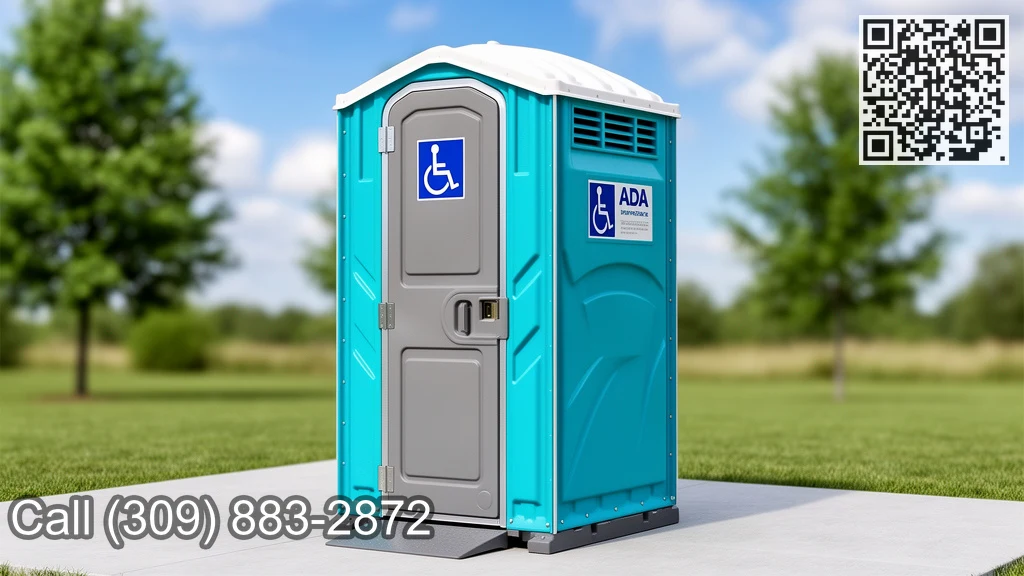
An usual planning error is to place the easily accessible system on soft ground, loose crushed rock, or a route broken by slopes, curbs, cords, pipes, fencing, or short-lived storage. Another is to tuck the available system off to the side since it is bigger and more challenging to fit into the row. Even if the rental firm provides the right ada handicap available mobile bathroom, the site arrangement can still weaken accessibility.
What "5 percent" appears like in genuine life
The standards provide the portion requirement, and that is the regulating guideline. In day-to-day preparation, people frequently want a quick means to think of it. If the collection is little, you still require to see to it the available demand is fulfilled within that group of systems. If the cluster obtains larger, the variety of called for available units climbs with it.
What issues most is that you do not treat the portion delicately. A cluster of mobile toilets is not excluded just because it is short-term, and an event is not excluded just because every person is moving fast. Temporary events are especially part of the conversation here.
I would be careful regarding making up your very own rounding method unless your legal guidance or authority having actually territory has provided instructions. The validated government rule right here is the 5 percent minimum in each cluster. If your matter lands in a gray area and you doubt just how to apply it, the useful and gentle response is straightforward: do not shave it close. Order adequate ada compliant mobile commodes to plainly satisfy the need and make sure they are appropriately placed.
That method tends to stop 2 headaches at the same time. First, it reduces the threat of underproviding accessible units. Second, it normally improves the guest experience for people that need even more space, simpler entry, and useful clearances.
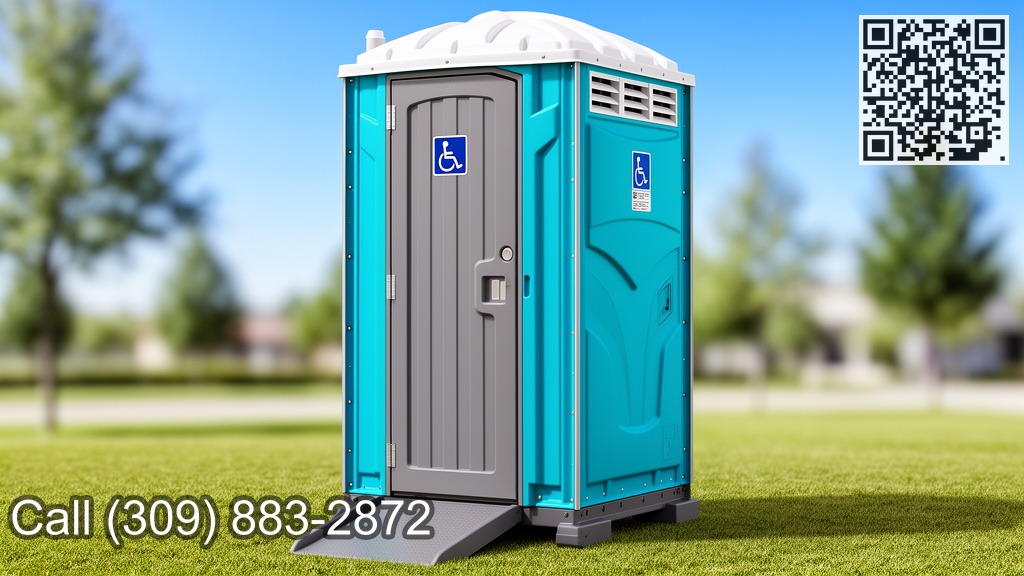
Temporary does not indicate exempt
This factor deserves ordinary language because it still shocks people. The easily accessible system need applies even at momentary events. That implies shows, fairs, temporary community events, and comparable rental circumstances are not outside the reach of accessibility rules even if the arrangement just lasts a day or a weekend.
The useful effect is that a portable commode rental plan needs the very same technique you would certainly give an extra irreversible facility. If you are mapping camping tents, stages, secure fencing, food areas, and parking, the ada portable commode rental part need to https://keeganvdnl479.northstarcolumn.com/posts/ada-compliant-portable-toilets-understanding-door-maneuvering-clearances be part of that site conversation early, not something managed the mid-day prior to delivery.
I have actually viewed event teams spend hours going over generator placement and group circulation, then deal with bathroom access like a last-minute upgrade. It is a lot easier to obtain this right when the easily accessible course and system positioning are prepared before vehicles arrive.
The construction-site exemption people misunderstand
There is an important exemption in the older 1991 typical language that usually gets duplicated without context. Portable commode units at construction sites utilized exclusively by building and construction workers were discriminated under that earlier scoping provision.
What matters for most visitors is this: that exemption does not erase the accessible-unit demand for basic portable bathroom rentals. If you are organizing portable restrooms for the general public or for a mixed-use setting, you must not presume that a construction-related carveout puts on you.
This is just one of those areas where partial expertise creates troubles. A person hears that construction portable toilets are discriminated and afterwards thinks all temporary devices are outside the accessibility guidelines. That is not a safe assumption. For general rental clusters, the accessible-unit requirement remains.
The distinction between a larger device and an easily accessible one
Not every bigger portable washroom is automatically an ada compliant portable commode. Size aids, but size alone is not the standard.
For a portable system to work as the called for obtainable option, it has to satisfy the appropriate technological requirements for commode rooms. That consists of transforming space, door steering clearances, fixture clearances, and the appropriate grab bar and water wardrobe clearance rules. It additionally requires available approach and entry. On top of that, it needs to be understood the International Sign of Accessibility.
This is where exact language issues when you speak with a rental provider. If you merely request for a "huge device," you might not obtain an ada compliant mobile bathroom. If you ask especially for an ada accessible portable toilet and verify that it is intended to please ADA access demands, the conversation obtains much clearer.
I likewise suggest staying clear of shorthand that leaves way too much area for interpretation. Terms like "wheelchair device" or "handicap device" occasionally get made use of loosely in the area. If you need compliance, claim so straight. Ask for ada certified easily accessible mobile bathrooms, and afterwards validate exactly how they will be set up and identified on site.
Placement can make or break compliance
An accessible mobile washroom ought to not really feel like an unique detour. It should be integrated right into the cluster in a manner that a person can really make use of without unneeded barriers.
That indicates thinking about the course initially. If the available unit is divided by mud, ruts, visuals, steep short-term shifts, or blocked paths, the easily accessible label does refrain from doing a lot good. The route and entryway require to be available, and any kind of ramps or touchdowns that are essential must comply with the technological requirements.
Then consider the door and the prompt area around it. Door steering clearances become part of the technical requirements for the bathroom room. In useful terms, crowding the unit with barricades, wastebasket, water barrels, or piled supplies is a poor behavior. I have actually seen arrangements where the unit itself was probably appropriate, but the area in front of the door had been swallowed by event gear by opening time.
Inside the unit, transforming space and component clearances are not optional details. They are the factor an obtainable system is various from a standard one. Any person that has attempted to navigate a confined short-term restroom recognizes that a few inches in the wrong area can turn a nominally easily accessible unit into a frustrating one.
A valuable way to assess a rental cluster prior to opening
The simplest time to take care of an access trouble is prior to guests or attendees show up. Once lines kind and the site is active, relocating devices or rebuilding gain access to is much harder.
Here is the review I like to see prior to sign-off:
- Confirm that each cluster of portable single-user units includes at the very least 5 percent easily accessible units.
- Check that every required ada mobile bathroom is noted with the International Icon of Accessibility.
- Walk the course to every obtainable system and see to it the entry is in fact accessible.
- Verify that any type of ramps or touchdowns offered as part of the setup adhere to ADA technical requirements.
- Make sure the device is not obstructed which the required inside use has actually not been compromised by setup shortcuts.
That might appear fundamental, but most costly mistakes in this area are standard mistakes. A person purchased the ideal device and put it in the incorrect place. Somebody reserved an ada mobile toilet, yet a distribution group shifted the design to include a fencing line. Someone presumed the rental company handled all ADA information, while the event team thought the very same in reverse.
What customers normally ask after they listen to the 5 percent rule
Once individuals recognize that a minimum of 5 percent of each collection need to come, the next concerns are often functional. Is one system sufficient? Do we require greater than the minimum? What happens if the website is spread out?
The government requirement in the validated context provides the minimum percentage for every collection. Past that, judgment matters. If your site has a number of separate bathroom financial institutions, assume in terms of actual traveling patterns, not simply arithmetic. A single ada portable bathroom in one remote corner may technically please one collection however still serve people badly if the event footprint is huge and movement between areas is difficult.
There is also a human truth that does not always turn up in formulas. Accessible systems are often utilized by people that need even more area for movement devices, assistance, or handling, yet they may also be sought by other guests just since the system really feels roomier. That is one reason coordinators often determine to exceed the bare minimum, especially at active public events. I can not inform you a global number beyond the verified government minimum, but I can say that developing to the minimum only works well when the rest of the configuration is thoughtful.
If you anticipate heavy traffic, separated activity zones, or long dwell times, a thin conformity method can develop genuine stress for individuals that depend upon the accessible units.
Accessibility becomes part of a broader compliance culture
There is a bigger backdrop worth observing. ADA conformity is not getting lesser or less noticeable. Enforcement and support activity throughout industries continues, and accessibility assumptions are progressively part of how companies are judged, both legitimately and publicly.
That does not transform the technical guideline for mobile commode collections, which stays the 5 percent accessible minimum in each cluster, along with the course, entry, recognition, and toilet-room needs currently gone over. What it transforms is the wisdom of dealing with these responsibilities casually. The days when a location can assume no one would look very closely are fading.
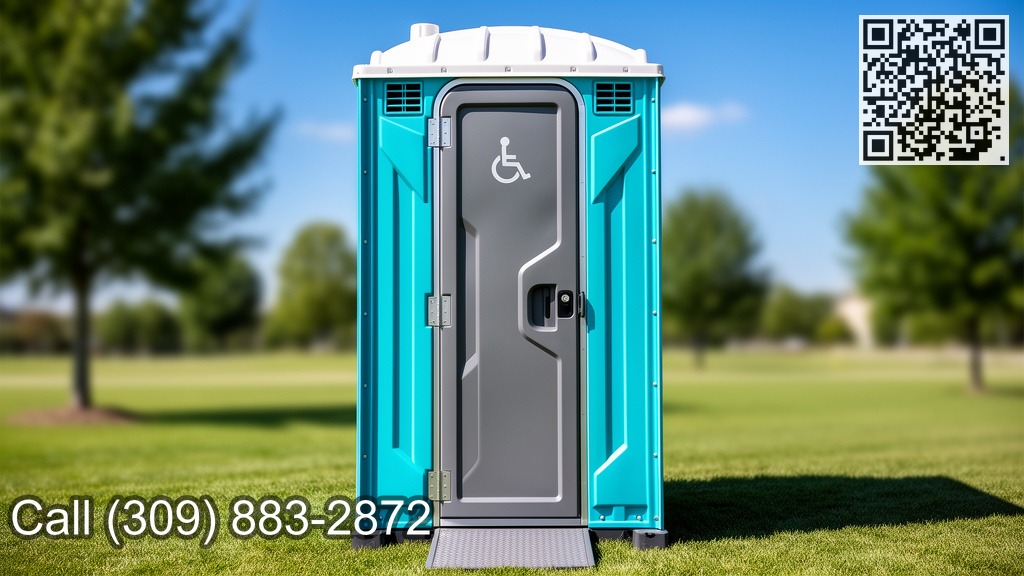
For event organizers and website managers, that means the obtainable toilet strategy ought to be documented, checked, and coordinated with the rental carrier instead of taken care of informally.
The concerns worth asking your rental company
A shocking quantity of problem can be stayed clear of by asking much better inquiries prior to distribution. Not every service provider makes use of the exact same terminology, and not every sales discussion normally enters into technical details unless you push for them.
The most helpful concerns are straightforward. Ask whether the system being proposed is an ada certified portable bathroom intended to satisfy ease of access demands. Ask the amount of accessible systems are being designated to each cluster. Ask just how the systems will be identified. Ask what the provider expects from the site in order to keep an obtainable route and entrance. If ramps or touchdowns are part of the configuration, ask that is in charge of ensuring those elements comply.
You do not need to turn the telephone call right into a legal seminar. You just require clearness. A lot of clients presume "obtainable" is self-explanatory, but on a crowded project, presumptions are where errors live.
The most safe mindset
The safest way of thinking is to think about the available mobile toilet as component of the core toilet package, not as an add-on for optics. Once you do that, the planning enhances. The system gets placed where individuals can reach it. The course obtains examined before opening up. The icon is visible. The cluster count makes good sense. The arrangement serves actual users as opposed to satisfying an unclear checklist.
So, the number of ada certified mobile toilets are needed in a rental cluster?
At the very least 5 percent of the portable single-user units in each cluster must be accessible. Those units must be understood the International Icon of Availability, and they have to be set up in a way that offers an obtainable course, an easily accessible entry, and compliance with the appropriate toilet-room technical requirements, including transforming area, door navigating clearances, fixture clearances, and the appropriate grab bar and water storage room clearance rules.
That is the legal facility of the answer. The functional center is equally as important: if an individual can not reach it, enter it, transform inside it, and utilize it with self-respect, the work is not done.
 Ask ChatGPT
 Ask Grok
 Ask Perplexity
 Ask Claude
 Ask Google AI
 Ask You
Ends · MARTINNDWZ310